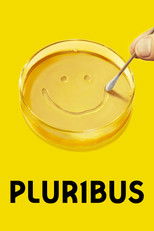
Pluribus
Happiness is a state of mind.
The most miserable person on Earth must save the world from happiness.
Wokeness: 0%
Overall Score: 80%
Please Log in to Submit a Review!
Where to Watch

User Submitted Reviews
Absolutely great
Been waiting for this since Breaking Bad. Overal a really good first 2 episodes. The LBTQ community is already pissed off as the first and only ‘lesbian’ character dies in the first episode. Calling it ‘buried its gays’ (Techradar article). Meaning it does not really play into the woke thought.
All in all, the first 2 episodes, woke-free.
Comments (1)
Please log in to comment.
Created: 11-07-2025
After the full season...
I'm through Season 1. The lead role, Carol, was established to be lesbian in episode one. Her partner gets killed off within the first few minutes so Carol is by herself. There was a flashback in Episode 3 showing the two checking into a theme-hotel. There was no depiction of affection beyond the same kind of hug that sisters would share. Fast forward to the end of Season 1... Carol and Zosia, the representative hive-minder, engage in a lesbian relationship. By then, you could tell that was eminent. Add this to the growing list of great stories ruined by LGBT agenda along with Matlock and Lisbeth. They really let the story unfold before setting the hook.
The theme of this series is genuine sci-fi. The hive-mind concept is well presented. In short, everyone knows everything that humanity has ever experienced. Anyone can perform brain surgery, fly an airliner, or replace a broken axle on a truck. When you talk to anyone, you're talking to everyone. It sounds simple, but there's a lot to it. Rhea does a great job as the cynical Carol. She's kind of a one-dimensional character, but it fits. According to Vince Gilligan, the part was written with her in mind.
I won't be there for Season 2.
Created: 11-24-2025
Hard sci-fi with fantasy elements, no forced political messaging.
First things first: the person writing this analysis has actually read the material people usually reference when they talk about DEI policies tied to the cultural movement called WOKE.That includes things like Executive Order 14035 (DEIA, 2021), Executive Order 13988 (gender identity and sexual orientation, 2021), EEOC guidance on Title VII, court decisions like Students for Fair Admissions v. Harvard (2023), and state-level laws such as Florida’s HB 7 (2022), along with similar measures elsewhere. These policies were widely criticized for encouraging identity-based hiring and training frameworks that, according to critics, created bureaucratic overhead, legal gray areas, creative constraints, and in some cases counterproductive results within the entertainment industry.
That said, those executive orders, laws, and court rulings did not create the WOKE movement. That movement has much broader cultural roots: academia, media, corporate culture, social platforms, and earlier activist currents. In short, legal and administrative actions helped institutionalize certain ideas, but they weren’t the sole drivers, or even necessarily the primary ones, behind what people now label as WOKE culture.
What’s being criticized here, specifically in audiovisual storytelling, is the WOKE approach itself, not the presence of a gay character, a trans man, a non-binary character, or a lesbian. In film and TV, “woke” usually means something else entirely: narrative choices that feel forced in order to push a political message, where an external agenda overrides story logic. Something becomes woke when it’s shoved into the narrative, poorly integrated, breaks internal consistency, feels out of place, or exists mainly to serve a message instead of the plot or the characters.
Quick but necessary clarification before moving on: if someone reading this can’t tell the difference between cultural criticism and political positioning, I genuinely don’t recommend continuing. This is about storytelling, industry context, and narrative decisions—not about telling anyone how to vote or what ideology to adopt.
Now, something you don’t usually see on this site: a very clear warning that heavy spoilers are coming.
⚠ SPOILER ALERT ⚠
In Episode 1, it’s established right away that the protagonist is a woman in a relationship with another woman. If that’s part of the setup from the start, that is not woke—it’s just the foundation of the story. I am not anti-homo; I am anti-woke (and if anyone reading this is anti-homo—meaning that seeing two people of the same sex being attracted to each other bothers you—that’s your issue. You always have the power in your hands: you can switch shows, change the channel, or just turn the damn thing off. No one is forcing you to watch this. And if you get worked up over it, you already lost).
So, as I was saying, her partner dies very early on, but if the character is attracted to women and you’re presenting her as potentially "the last human on Earth", then yes, you’re obviously going to show romantic moments between them. Expect that kind of content. It’s not subtle, and it shouldn’t surprise anyone.
ℹ SAFE TO READ ℹ
That said, the first episode itself is fairly weak. Like a lot of viewers worldwide, many people probably kept going mainly because Vince Gilligan is behind it—the same Vince Gilligan who created what a massive chunk of the planet still considers the greatest TV series ever made: Breaking Bad. Otherwise, I’m honestly not sure I would have kept watching, since the inciting incident leans a bit too hard into the fantastical and everything moves extremely fast. The episode feels more like a setup vehicle to establish the apocalypse so Carol’s story can start, which isn’t exactly Gilligan’s usual pacing or style.
From that point on, though, the show steadily improves. I won’t repeat what other comments have already covered about the plot, because I mostly agree with them: after Episode 2, everything becomes much tighter, well structured, and genuinely organic.
⚠ STRONG SPOILER ALERT ⚠ (important political reference)
However, there’s a specific moment I want to highlight. In one episode, she asks to speak with someone outside her house. A man steps forward—someone who, before becoming part of the hive mind, was the mayor of Albuquerque. Out of several people present, he volunteers, and she flatly says: “No. No politicians.” And that, right there, reads as a very clear “I’ll play by the rules, but I don’t want politics running the conversation” signal in the script—and that, yes, that is a good sign.
ℹ SAFE TO READ ℹ
The reason this stands out is simple. If we’re watching a show of this scale now, finished, almost in the last quarter of 2025, it’s because it spent years in production beforehand. That means that when it was being shot, the creators were operating under the rules, expectations, and legal frameworks of the time. Filming started in Albuquerque, New Mexico, in November 2023, and that context matters.
Zooming back out, Apple TV’s official synopsis was always very clear: “The most miserable person on Earth must save the world from happiness.” With a premise like that, you shouldn’t expect a charming or heroic lead. Don’t expect warmth. She’s a selfish person—apathetic, stubborn, short-tempered. You might recognize pieces of yourself in her, sure, but this isn’t a story designed for easy identification or emotional comfort. You’re not meant to fully like her. In many ways, that’s the entire point.
So, anyone who’s curious should just watch it chill. There’s no forced message here, SO FAR. The pacing is slow and, honestly, it can get annoying at times. It feels like it drags more than it needs to, but that’s just how the show is built. Still, it pulls you in because the core of the story works. The characters feel grounded, with real flaws and real attitudes, and the protagonist, more often than not, ends up being her own worst enemy.
Enjoy.
Comments (1)
Please log in to comment.
Created: 12-27-2025